 By Editorial Team
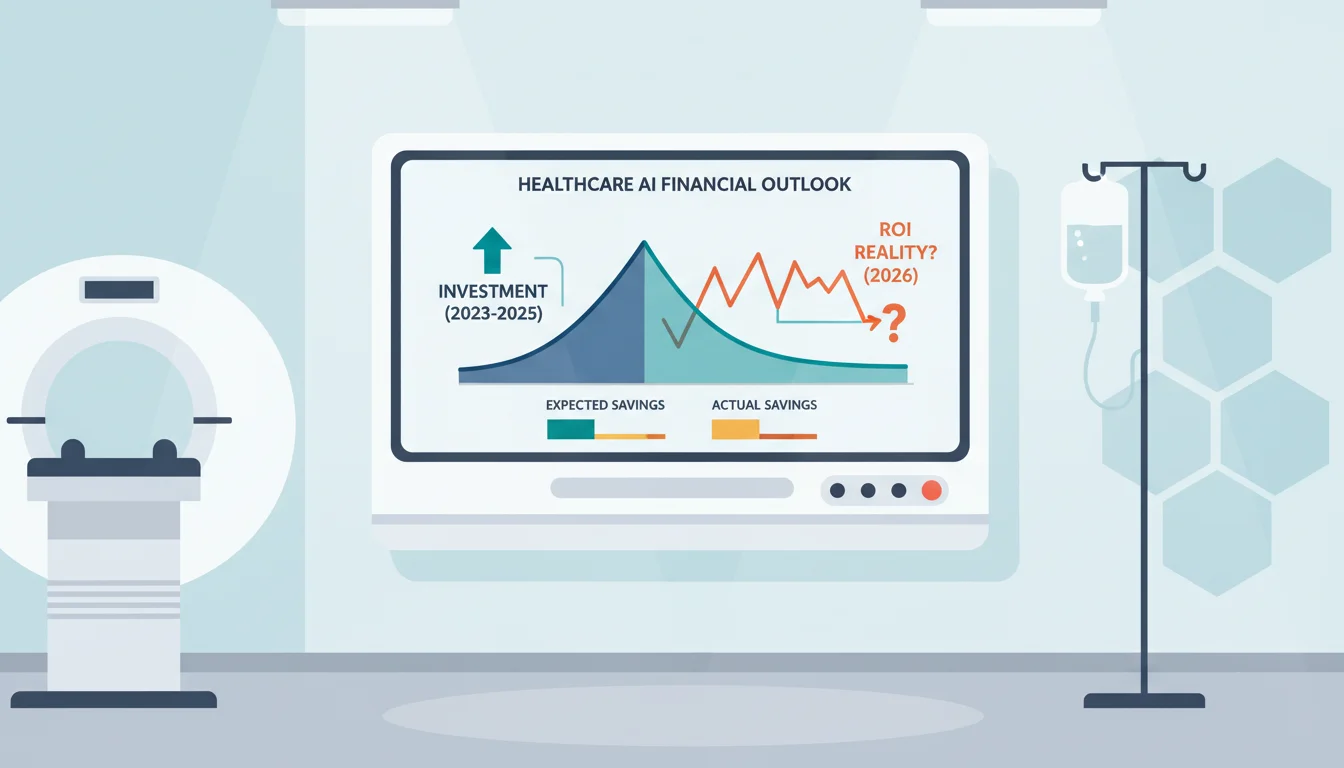
Dr. Anya Sharma, Piedmont Atlanta Hospital’s lead administrator for population health, felt a growing unease as she looked over the Q3 2026 budget. Earlier in the year, her team had pushed hard for a new AI diagnostic assistant, which came with big promises of better early disease detection and lower readmission rates. The pilot data looked incredible, but six months later the financials told a different story. The anticipated savings just weren’t there. Yes, patient outcomes were getting better, a huge win, but the costs of deploying the AI, maintaining it, and retraining staff were blowing past any financial benefits they could actually measure. This disconnect showed exactly why measuring healthcare AI ROI is so important. You have to move past good feelings and get to concrete financial proof.
Key Takeaways
- You have to set clear, financial metrics for any AI project from day one (think lower op costs or better billing accuracy) or you’re setting yourself up for failure.
- The total cost of an AI system is way more than the license fee. It includes new servers, data integration work, constant staff training, and maintenance.
- When calculating ROI for AI, you need to look at direct financial wins and also the indirect stuff like happier patients or less-stressed clinicians, even if you have to use proxy metrics for those.
- Roll out AI in phases. This lets you collect data and make small changes to the tech and your team’s workflow along the way, which is the only way to make sure it’s financially sustainable.
The Promise and Risk of Unmeasured Innovation
Healthcare is always under pressure to do more with less, so it’s no surprise the sector jumped on artificial intelligence. The potential is obviously there, from predicting disease outbreaks to automating administrative work. You see reports like Accenture’s from 2024 projecting AI could save the U.S. healthcare system over $150 billion a year by 2026, but those numbers are about potential, not the messy reality of getting these things to work. What happened to Dr. Sharma at Piedmont Atlanta is happening everywhere. Hospitals are stuck with great clinical results on one hand and a financial black hole on the other. The initial excitement for their AI, called “ClarityDx,” was because it could tear through patient records and imaging data faster than any person, flagging problems with scary accuracy. Clinicians loved it, and they were reporting fewer diagnostic mistakes in tough areas like oncology and cardiology.
Dr. Sharma figured out the problem wasn’t ClarityDx itself. The real issue was the hospital had no solid way to measure its total financial impact. “We were all in on clinical efficacy during the pilot, which made sense,” she said in a recent review. “But we completely missed the hidden costs and didn’t set any real financial ROI targets besides some fuzzy idea of ‘improved efficiency’.” Because of that miss, patients were getting better care through earlier diagnoses, but the finance department had no way to connect those wins to the hospital’s budget. And the upfront cost for ClarityDx was huge: a multi-year license, big IT upgrades for data processing, and a whole new data science team just to tweak the algorithms for Piedmont’s own patients.
Beyond the Purchase Price: The True Cost of Healthcare AI
A huge part of the problem with measuring healthcare AI ROI is that people wildly underestimate the total cost. It’s never just the software license. For ClarityDx, the hospital had to buy new high-performance servers and more cloud storage. Then the operational costs started piling up. Staff training was a huge one. A 2025 survey from the American College of Healthcare Executives found that almost 60% of hospitals said poor staff training was holding back their AI adoption. Piedmont Atlanta spent a fortune training radiologists, pathologists, and PCPs how to use ClarityDx’s outputs, fit them into their day, and know what the tool couldn’t do. And it wasn’t a one-and-done training session. Every time the AI model got an update, they had to do more education.
Getting the data to work was another nightmare. ClarityDx had to pull info from all over the place, the EHR, the PACS for images, and different lab systems. Every single connection point needed custom coding, a ton of testing, and then constant upkeep. “We knew we had data silos, but we had no idea how bad it was,” Dr. Sharma admitted. “Just getting our systems to ‘talk’ to ClarityDx in a stable way, without breaking patient privacy rules, ate up a shocking amount of IT time and money.” This isn’t just a Piedmont problem. A 2025 KLAS Research report found that these exact data integration issues delay AI projects for over 40% of hospitals, pushing any hope of seeing an ROI way down the road.
Defining the Metrics for a Real ROI Calculation
To get a real handle on ROI, you have to define what financial success actually looks like alongside the clinical wins. So Dr. Sharma pulled together a task force with people from clinical, IT, and finance to take another look at ClarityDx’s performance. Their first job was to nail down specific, measurable financial numbers the AI could actually affect. Their list included things like:
- Reduced Length of Stay (LOS): If you diagnose earlier, can you get patients home faster for certain conditions?
- Decreased Readmission Rates: For stuff like congestive heart failure, where ClarityDx gives predictive warnings, could it cut down the 30-day readmissions that come with big financial penalties?
- Optimized Resource Utilization: Could the AI help manage imaging schedules or lab tests better, cutting out unnecessary procedures or getting critical results faster?
- Improved Billing Accuracy: ClarityDx doesn’t do billing, but maybe its clearer diagnostic information could lead to better coding and fewer claims getting denied.
The team also looked past the direct financial stuff to the indirect benefits, the things that are harder to put a dollar sign on but still affect the hospital’s bottom line. Think about better patient satisfaction (which helps with loyalty and reputation) or lower clinician burnout (which saves a ton on staff turnover and recruiting). “We knew we couldn’t measure these directly, so we had to find proxies,” Dr. Sharma said. “For patient satisfaction, we started tracking our HCAHPS scores on communication. For burnout, we compared turnover rates between departments that were heavy ClarityDx users and those that weren’t.”
Finding the Path to a Positive ROI
Piedmont didn’t scrap ClarityDx after the re-evaluation. Instead, they decided to get smarter about how they used it and reset their expectations. The task force suggested rolling it out in phases, starting with the departments where they could most easily see and measure a financial return. For example, they set up a focused pilot in cardiology, where ClarityDx was already good at spotting early signs of heart failure. They started tracking length-of-stay and readmission rates for patients treated with AI insights against a control group, giving them the hard, comparative data needed to finally calculate a real financial impact.
Fixing the workflow was another key adjustment. ClarityDx was meant to help clinicians make better decisions, but sometimes it just added extra clicks and slowed them down. The task force sat down with doctors and nurses to find the exact bottlenecks. A perfect example: they built an automated API so physicians didn’t have to enter patient data into the EHR and *then* re-enter it into ClarityDx. It sounds like a small fix, but that one change massively improved clinician adoption and saved time, which translated directly into cost savings.
The team also went back to the vendor and negotiated for a more flexible license that scaled with actual usage instead of being a flat yearly fee, which helped line up costs with the value they were getting. At the same time, they started building up their own in-house team to manage the ClarityDx algorithms, which meant they could stop paying expensive outside consultants. “We learned the hard way that AI is not a ‘set it and forget it’ technology,” Dr. Sharma reflected. “You have to constantly watch it, adapt, and be ready to change course based on what the data is telling you, not what the sales pitch promised.”
The Long Game: AI as a Strategic Health Investment
By the first quarter of 2027, a little over a year in, Piedmont Atlanta finally started seeing real money back from ClarityDx, especially in cardiology and oncology. The 30-day readmission rate for heart failure patients in the cardio unit dropped by 8%, which was better than national benchmarks and saved them a bundle in penalties and resources. Over in oncology, they cut the average time from screening to a final cancer diagnosis by 15%. This meant they could start treatment sooner with what were often less aggressive and cheaper therapies. The ROI was definitely slower than they’d hoped, but their new, more careful strategy was actually starting to work.
Piedmont Atlanta’s story is a lesson for any hospital looking at AI. The potential of this technology is huge, but you only see real value when you have a disciplined, data-first approach to rolling it out and proving the financial case. If you don’t have a firm grip on total cost, the specific financial upsides, and the indirect wins, even an AI that works wonders for patients can become a money pit that your budget can’t sustain. The future of AI in medicine is about what it actually delivers for patients and for the hospital’s financial stability. When you make ROI measurement a priority from the very beginning, AI stops being a shiny object and becomes a smart, sustainable investment in better health.
At the end of the day, accurately measuring healthcare AI ROI isn’t just a nice-to-have. It’s a basic requirement if you want to keep bringing in new technology to help patients without going broke. It means you have to commit to smart financial planning, constantly check how the tool is performing, and be willing to change your rollout plan to make sure you can actually afford the great results AI can bring.
What are the biggest mistakes people make when calculating healthcare AI ROI?
The most common mistakes are underestimating the total cost (it’s way more than the software), not setting clear financial goals from the start, ignoring how hard and expensive data integration will be, and not budgeting enough for the continuous staff training and system maintenance required.
How do you track the “soft” benefits of AI, like happier patients?
You use proxy metrics. For patient satisfaction, you can watch for changes in your HCAHPS scores, see if patient retention improves, or track online reviews. To measure clinician burnout, you can look at staff turnover, absenteeism rates, and internal surveys about workload and job satisfaction.
How important is data integration to getting a positive AI ROI?
It’s everything. AI is useless without clean, complete data from your EHR, PACS, and lab systems. If you have bad integration, you’ll get bad data, delayed results, and huge IT bills for custom fixes. It’s one of the fastest ways to kill an AI project’s effectiveness and guarantee you’ll never see a financial return.
Should we focus on financial ROI or clinical outcomes?
Clinical outcomes always come first. This is healthcare. But for any new technology to be sustainable, its clinical benefits have to be supported by a viable financial model. The goal is to find AI tools that dramatically improve patient care *and* can prove their financial worth, so you can afford to keep using them and scale them up.
How long does it really take to see a positive ROI on healthcare AI?
It depends entirely on the project. Simple administrative AI tools might pay for themselves in 6 to 12 months. But for the big, complex diagnostic systems like ClarityDx, you should probably plan on it taking 18 to 36 months, or maybe even longer, before you can show a clear financial win after you’ve paid for all the implementation, training, and fixes along the way.


